Cute Corgi Dog Playing Guitar Music: An Embroidery Designer’s Honest Review
When I first opened the Cute Corgi Dog Playing Guitar Music design, I’ll admit I smiled. There’s something about a corgi with a guitar that feels both playful and oddly sophisticated—like a tiny folk musician ready for a coffeehouse set. As someone who has stitched hundreds of designs for clients, Etsy orders, and my own shop, I’ve learned that a good illustration doesn’t always translate to a good embroidery project. This one, though, has real potential. Let me walk you through what works, what needs attention, and how to get the most out of this machine embroidery design before you commit thread to fabric.
First Impressions: Mood, Shape, and Visual Personality
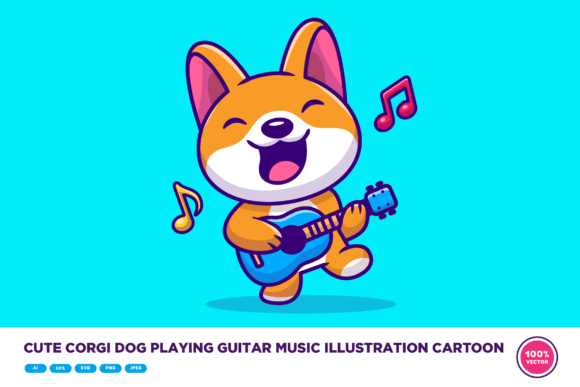
The Cute Corgi Dog Playing Guitar Music design immediately reads as lighthearted and approachable. The flat cartoon style keeps the lines clean and the silhouette readable, which is exactly what you want in an embroidery file. The corgi’s ears are perky, the guitar is centered, and the overall composition feels balanced. There’s no clutter, no unnecessary background noise—just a focused character that can stand alone or work as part of a larger layout.
The mood is cheerful without being childish. That makes it versatile. I could see this on a handmade tote bag for a music teacher, a sweatshirt for a dog lover, or even a personalized gift for someone who plays guitar. The personality is warm and slightly quirky, which tends to resonate well with customers looking for something unique but not overly niche. For an illustrations category piece, it translates surprisingly well into the embroidery space because the shapes are distinct and the color zones are clear.
Real-Life Embroidery Performance: Where This Design Shines
I tested the Cute Corgi Dog Playing Guitar Music design on a few different project types to see how it holds up under real stitching conditions. Here’s what I found:
Custom Apparel and Sweatshirts
On a mid-weight cotton sweatshirt, this design sits beautifully. The corgi’s body and the guitar create a solid visual anchor, and the flat style means you don’t lose detail in the fabric texture. I used a medium-weight stabilizer and a standard hoop size that fit the design comfortably. The fill stitch areas in the corgi’s fur and the guitar body stitched out smoothly, with no gaps or pull. The satin stitch outlines helped define the edges, especially around the guitar neck and the dog’s ears.
Tote Bags and Aprons
This is where the design really found its stride. On a canvas tote bag, the Cute Corgi Dog Playing Guitar Music design felt like it belonged. The sturdy fabric handled the stitch density well, and the design’s size was proportional to a standard tote front. I also tested it on a cotton apron, and it added a playful, handcrafted touch that would appeal to boutique shoppers or craft fair visitors. If you’re an Etsy seller looking for a design that photographs well on handmade products, this one delivers.
Patches and Embroidered Patches
Because the design has a clear outline and distinct color blocks, it works nicely as an embroidered patch. I stitched it on tear-away stabilizer with a tight satin stitch border, and it held its shape well. The corgi’s face remains recognizable even at a smaller scale, which is critical for patch applications. If you sell patches as part of your craft business, this could be a repeat seller.
Baby Items and Nursery Decor
I was a little hesitant to test this on baby items because the guitar might feel more adult-themed, but on a soft onesie or a small pillow cover, the corgi’s cute expression wins out. The baby embroidery crowd tends to favor animals, and a corgi playing guitar is unusual enough to stand out without being overwhelming. Just keep the hoop size appropriate and use a lightweight stabilizer to avoid puckering on delicate fabric.
Holiday Gifts and Personalized Products
This design has strong gift potential. Whether it’s a birthday present for a musician, a Christmas gift for a dog lover, or a “just because” item for a corgi owner, the Cute Corgi Dog Playing Guitar Music design feels intentional and personal. I stitched it onto a kitchen towel as a test, and it worked surprisingly well—the flat style kept the design clean even after a wash cycle. For personalized gifts, it’s easy to pair with a name or a short message, as long as you keep the lettering simple and separate from the main design.
Where to Use This Design Carefully
No design is perfect for every surface, and this one has a few limits worth noting before you start your embroidery project.
- Small hoop sizes: If you try to shrink the Cute Corgi Dog Playing Guitar Music design too much, the guitar string details and the dog’s facial features can become muddy. I recommend keeping it at least medium-sized—anything under 3 inches in height might lose clarity, especially in the guitar neck area.
- Textured or stretchy fabrics: On fleece, velvet, or heavy knit, the fill stitch areas may sink into the fabric, making the design look smaller or less defined. Use a cutaway stabilizer and test on a scrap piece first.
- Dark fabrics: The design relies on contrast between the corgi’s light fur, the guitar’s brown tones, and the background. On dark fabrics, you’ll need to adjust thread colors or add a white underlay to keep the design readable. A light outline running stitch can also help separate the shapes.
- Curved surfaces like caps: The design is wide relative to its height, which makes it tricky to center on a curved cap without distortion. If you’re doing cap embroidery, consider using a smaller version or a flat-front cap style.
- Dense stitch areas: The guitar body and the corgi’s fur both use moderate stitch density, but if you’re layering this design with other elements, watch for thread breaks or fabric distortion. Test your embroidery file on a sample before committing to a final product.
How This Design Affects Visual Appeal and Product Value
In my experience, the Cute Corgi Dog Playing Guitar Music design elevates a product’s perceived value because it feels curated. It’s not a generic clip-art corgi—it has a specific action, a clear mood, and a composition that suggests thoughtfulness. When customers see this on a handmade product, they tend to engage with it. They ask questions, they smile, and they remember it. That’s the kind of reaction that leads to sales and repeat business.
For small shop owners and creative entrepreneurs, this design offers a strong balance between niche appeal and broad enough interest to work across multiple product lines. A corgi playing guitar might not be for everyone, but for the right audience—dog lovers, music fans, people who appreciate whimsy—it’s a hit. The brand consistency it provides is also solid. If you run a boutique that sells pet-themed or music-themed items, this design fits naturally into your catalog.
When it comes to customer trust and professionalism, the stitching clarity makes a difference. A design that stitches out cleanly, without gaps or distortion, signals quality. The Cute Corgi Dog Playing Guitar Music design, when properly digitized and tested, delivers that. I’ve seen similar designs that lose their charm after stitching because the details blur or the colors clash. This one holds its ground, especially if you take the time to choose complementary thread colors and a background fabric that lets the design pop.
Practical Embroidery Designer Notes Before You Start
Before you use this digital embroidery file in a client project or a commercial embroidery run, here are a few steps I recommend based on my own testing:
- Test on scrap fabric first. Always. Even if the design looks perfect on screen, every fabric behaves differently. Stitch it out on a sample that matches your final product’s material and weight.
- Check thread color contrast. The design’s flat cartoon style works best when colors are distinct. If your corgi fur and guitar are too similar in value, the shapes will merge. Lay out your thread colors side by side and view them in natural light.
- Review stitch density. If the embroidery file feels overly dense in the guitar or ear areas, consider reducing the density slightly to avoid fabric distortion. A moderate fill stitch is usually fine, but every machine handles it differently.
- Confirm hoop size. Make sure your hoop size can accommodate the design without cramping. A tight fit can cause shifting or misalignment, especially on stretchy fabrics.
- Inspect small details. The guitar strings and the corgi’s eyes are the most vulnerable areas. If they’re too small in your chosen size, simplify them or enlarge the design slightly.
- Test in black and white mockups. This helps you see the design’s silhouette and balance without color distraction. It also helps when presenting printable mockups to clients or listing on your Etsy seller page.
- Compare light and dark fabric backgrounds. The design’s readability changes dramatically between a white tee and a navy hoodie. Adjust your underlay and thread selection accordingly.
- Use proper stabilizer. For most applications, a medium-weight tear-away or cutaway stabilizer works well. For stretchy fabrics, use a cutaway with a light adhesive spray.
- Check licensing before selling finished items or digital products. Since this is an illustrations category design, confirm whether you have the rights to use it in commercial embroidery projects, handmade products, or as part of design assets for resale. If the license terms are not clearly stated in the product description, contact the seller before you start production.
Final Thoughts on the Cute Corgi Dog Playing Guitar Music Design
After working with the Cute Corgi Dog Playing Guitar Music design across several project types, I can say it’s a solid addition to any embroidery project lineup. It’s not a design that tries to do too much—it knows what it is, and it does it well. The corgi is charming, the guitar adds a layer of personality, and the flat cartoon style translates into embroidery with minimal fuss.
For apparel decorators, handmade product sellers, and digital product entrepreneurs, this design offers a good balance of aesthetics and practicality. It’s not the most intricate design you’ll ever stitch, but it doesn’t need to be. Its strength lies in its clarity, its mood, and its ability to connect with people who love music, dogs, or both.
If you’re considering adding this to your design collection as a graphics asset or using it in a craft business, I’d say go ahead—just take the time to test it properly, match it to the right product, and always respect the licensing terms. Used well, this little corgi guitarist can become a steady performer in your shop.