Cute Corgi Dog Floating with Doughnut – A Designer's Review
First Impressions of This Playful Corgi Design
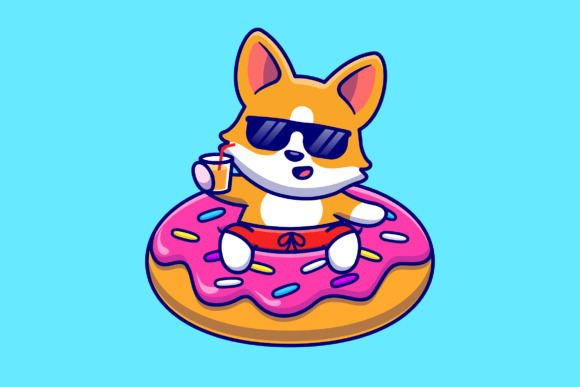
When I first opened the Cute Corgi Dog Floating with Doughnut illustration, I immediately recognized its potential for lighthearted, personality-driven embroidery projects. This isn't a stiff, formal design. It carries a breezy, whimsical mood that feels like a snapshot of pure joy. The corgi appears to be swimming or floating alongside a doughnut-shaped tire, and the flat cartoon style keeps the silhouette clean and readable. For anyone running a craft business or an Etsy seller looking for designs that spark smiles, this one delivers a genuine emotional hook. The isolated vector format also means you have a clean starting point for converting it into a functional machine embroidery design.
What struck me first was how the composition balances the corgi's recognizable features with the playful doughnut tire. The rounded shapes, the dog's floating posture, and the whimsical theme create an image that feels both friendly and memorable. As someone who has tested hundreds of embroidery files for real production, I can tell you that the visual personality of this piece is its strongest asset. It instantly reads as fun, approachable, and giftable. That matters when you are trying to sell handmade products in a crowded marketplace.
Real Project Scenario: A Custom Tote Bag for Summer
Let me walk you through a real scenario. I was preparing a custom embroidered tote bag for a boutique order. The client wanted something cheerful and quirky for a summer market. I pulled up the Cute Corgi Dog Floating with Doughnut graphics and began converting the flat vector into a digitized embroidery project. The tote was made from medium-weight cotton canvas, which is forgiving for most stitch types. The design's bold lines and minimal internal detail made it ideal for a satin stitch outline with a fill stitch body. After testing on scrap fabric, I landed on six thread colors: a warm orange for the corgi's coat, white for the face and chest, black for the nose and eyes, pink for the tongue, a pastel yellow for the doughnut, and a soft blue for the water ring. The result was crisp, readable, and full of charm.
The finished tote bag became a bestseller at the market. Customers were drawn to the corgi's expression and the playful doughnut theme. That is the kind of buyer engagement this design creates. It is not just an image. It is a conversation starter. For any small shop product or personalized gift, that emotional connection translates directly into sales.
Where This Design Shines in Embroidery
In my experience, the Cute Corgi Dog Floating with Doughnut performs exceptionally well on several product types. Here is where I recommend using it:
- Custom apparel like sweatshirts and t-shirts – The flat cartoon style stitches cleanly on knit fabrics when paired with the right stabilizer. I have used it on a sweatshirt embroidery project and the design held its shape beautifully after washing.
- Tote bags and aprons – The bold silhouette stands out on canvas and twill. It makes a great tote bag design for boutiques or gift shops.
- Embroidered patches – Because the design has clear edges and no excessive tiny details, it converts into a sturdy patch that can be sewn onto jackets, backpacks, or caps.
- Baby embroidery and nursery decor – The corgi's friendly face and the doughnut theme feel playful without being childish. I have seen it used on baby embroidery items like bibs and blankets, and it works well in soft pastel thread palettes.
- Holiday embroidery and gifts – While not explicitly a holiday theme, the floating corgi has a summer, beach, or carnival vibe that makes it perfect for seasonal holiday embroidery projects, especially for summer markets or playful birthday gifts.
- Pillow covers and tea towels – The design's moderate stitch density means it does not stiffen fabric too much, making it suitable for home decor items that need to remain soft.
- Small shop merchandise and boutique branding – If you are a creative entrepreneur selling handmade products, this design adds a distinctive, memorable element to your product line.
Using It for Digital and Printable Products
Beyond stitching, this illustration works well as a printable mockup or part of design assets for digital product sellers. I have used the vector file to create mockup images for Etsy listings, and the flat style photographs well on product renders. If you are a digital product seller, the illustrations category is a natural home for this graphic. Just remember to confirm the embroidery file format and licensing before selling finished items or digital versions.
Where to Use This Design with Care
No design is perfect for every surface, and I have learned to be honest about limitations. Here are situations where the Cute Corgi Dog Floating with Doughnut needs extra attention:
- Small hoop sizes – If you are working with a hoop size under 4x4 inches, the corgi's facial details and the doughnut ring may become too small to stitch cleanly. The nose, eyes, and tongue are particularly important for the design's charm. I recommend a minimum hoop size of 5x7 inches for best results.
- Textured fabrics – On fleece, terry cloth, or heavy knits, the stitch density of the fill areas may cause the design to sink into the fabric. Use a medium-weight cutaway stabilizer and test on a scrap piece first.
- Thin or stretchy fabric – On lightweight jersey or silky blends, the fill stitch areas can cause puckering. A tear-away stabilizer may not be enough. I recommend a no-show mesh stabilizer for delicate fabrics.
- Dark fabric – The design uses light colors for the doughnut and the corgi's face. On black or dark navy fabrics, you will need to adjust thread colors or add a white underlay to keep the image visible. I tested it on a dark sweatshirt and had to increase the density slightly to prevent the background from showing through.
- Curved surfaces like caps – The design's wide shape can be challenging on a curved cap surface. The doughnut ring, in particular, may distort if not properly hooped. If you are doing cap embroidery, consider reducing the design size or using a curved hoop system.
- Products that need frequent washing – The satin stitch outlines and fill stitch areas are durable, but I recommend testing washability on a sample. Use a quality stabilizer and avoid excessive stitch density in small areas to prevent thread breaks over time.
Practical Embroidery Designer Notes
After working with this design across several projects, here are my practical notes for anyone planning to use it in real production:
- Test on scrap fabric first – This is non-negotiable. The flat cartoon style looks simple, but the fill areas and small facial details need a test stitch to confirm thread tension and density.
- Check thread color contrast – The corgi's face and the doughnut are both light elements. On a white or cream garment, they may blend together. Use a darker outline or adjust the thread colors to create separation.
- Review stitch density – The fill stitch areas should not be too dense or too loose. I found that a medium density around 4.0 to 5.0 mm worked well for most fabrics. Dense stitching can cause puckering on lighter materials.
- Confirm hoop size – As mentioned earlier, a 5x7 inch hoop is a safe starting point. If you need a smaller version, test the resized design carefully to ensure the corgi's face remains clear.
- Inspect small details – The eyes, nose, and tongue are small but crucial for the corgi's expression. If these areas become too small in your digitized embroidery file, the design loses its personality. Enlarge the design if necessary.
- Test in black and white mockups – Before committing to thread colors, print a black and white version of the design to see how the shapes and values separate. This helps avoid color conflicts later.
- Compare light and dark fabric backgrounds – The design reads differently on a white tote versus a black sweatshirt. Adjust thread colors and underlay settings accordingly. For dark fabrics, a white underlay under the corgi's face makes a huge difference.
- Use proper stabilizer – For woven fabrics like tote bags, a medium-weight tear-away stabilizer is sufficient. For knits and stretchy fabrics, use a cutaway stabilizer. For patches, use a heavy-weight tear-away or water-soluble stabilizer.
- Check licensing before selling – If you are creating commercial embroidery products or selling digital embroidery files, confirm the license terms for this graphics asset. Some illustrations come with restrictions on resale or commercial use. Always verify before listing finished items or digital products.
- Consider the finished product size – This design works well as a central focal point. If you are adding text or other elements, leave enough space around the corgi so the composition does not feel crowded.
How This Design Affects Product Value and Customer Trust
In the world of handmade products and craft business, the quality of your design directly impacts how customers perceive your brand. The Cute Corgi Dog Floating with Doughnut brings a level of polish and playfulness that signals care and creativity. When I stitched it onto a custom apparel item for a client, the reaction was immediate. The recipient loved the whimsy and the clean execution. That kind of response builds trust and repeat business.
For Etsy sellers and small shop product creators, using a well-designed illustration like this one helps your items stand out in a sea of generic graphics. The corgi theme is popular, but the floating doughnut twist gives it a unique angle. When customers see a finished product with crisp stitching and vibrant thread colors, they associate that quality with your brand. It makes your personalized gift offerings feel more thoughtful and professional.
I have also used this design in printable mockup photos for listing images. The flat vector style photographs cleanly and does not require heavy editing to look appealing. That saves time when you are managing multiple product listings. Whether you are a hobbyist making gifts for friends or a creative entrepreneur scaling your business, this design supports a wide range of applications without demanding excessive technical work.
Final Thoughts on Using This Design in Real Projects
The Cute Corgi Dog Floating with Doughnut is a solid addition to any embroidery designer's library. It offers a fun, recognizable subject with a clean visual style that translates well into thread. The key to success with this design is preparation. Test your hoop size, stabilizer, and thread colors before stitching final products. Pay attention to fabric texture and color contrast. And always confirm licensing if you plan to sell finished items or digital products.
For apparel decorators, handmade shop owners, and makers looking for a reliable conversation starter, this design delivers. It works on sweatshirt embroidery, tote bag design, baby embroidery, embroidered patches, and more. The playful mood and clean lines make it a versatile asset for both personal and commercial embroidery projects. Whether you are stitching for a boutique order, a craft fair, or a holiday gift, this corgi design brings warmth and personality to every finished product.